Tales from somewhere kind-of familiar, in the sense that they’re like everywhere else we’ve ever been.
Chicken Bowl at Bartels
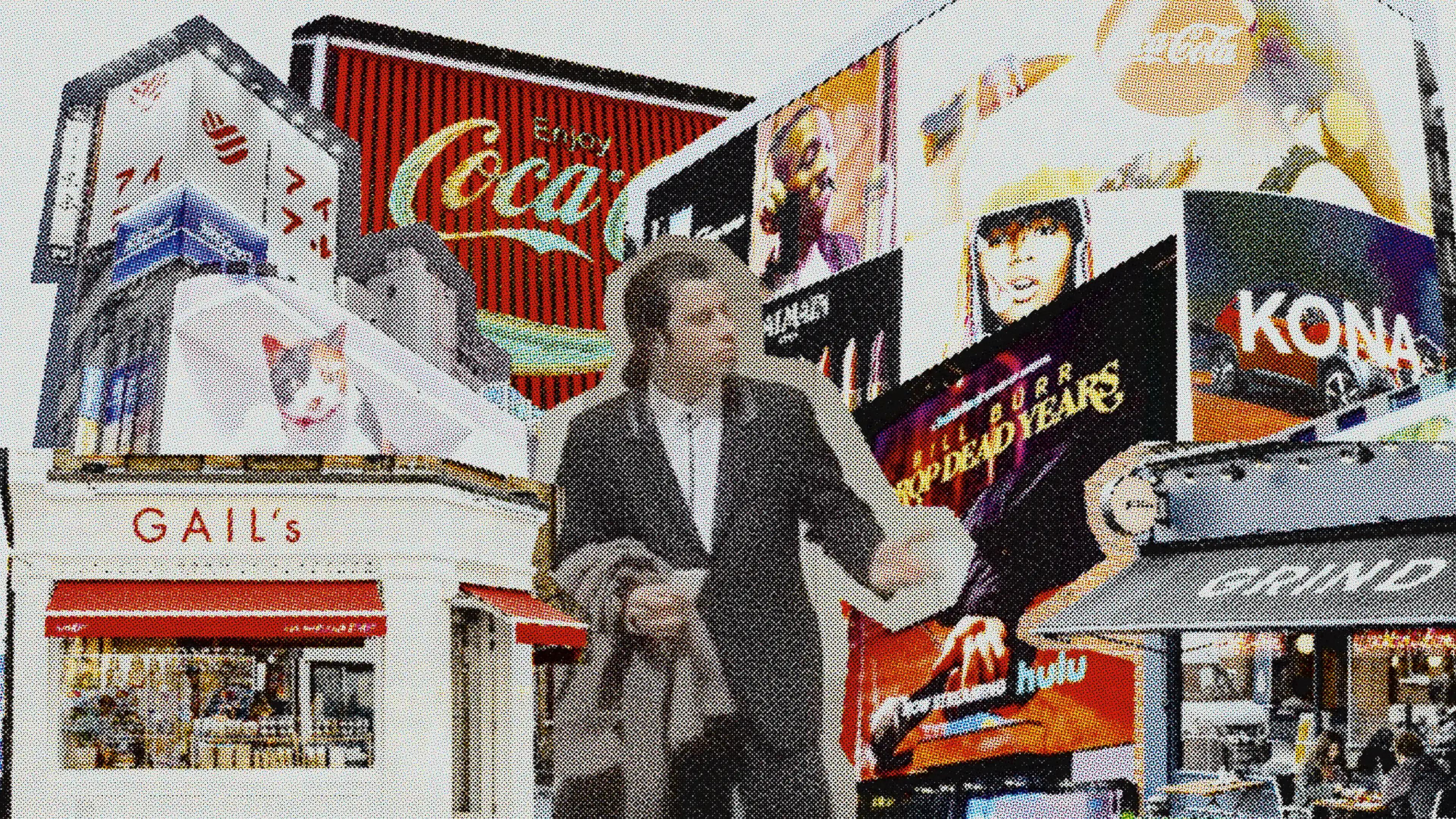
In February, I took a three-week trip around parts of South East Asia. Malaysia, Vietnam, Thailand. I had a really great time (besides the point). At some point during the stay in Bangkok, I caught myself having breakfast in a cafe on the south side of Silom — one of a chain of cafes called Bartels. Maybe foolishly I had sought out a known quantity — Bartels was a cafe I’d sat in a hundred times or more before. Crittal windows, white subway tiles, uneven tables of reclaimed wood. A chicken bowl and iced matcha. £13.50 (580บาท).
I felt that kind of uncomfortable white guilt you get when you realise that your presence (though far too late for anything to be changed) was not helping anybody. I was surrounded by Thai staff and touristic white customers. To my left was a man on a laptop, using Claude code to build an e-commerce app. I was close enough to his table to see the Slack messages he was sharing with remote co-workers.
In my mind, there was a kind of total collapse of place in that moment. I felt like an idiot, not because the salad was mediocre and expensive, but because I had paid a premium to participate in a song-and-dance erasure of where I actually was.
Marc Augé called these out in 1992 as “non-places”, in a book of the same title, as spaces shaped by globalisation into generic containers for commercial activity and that offer no sense of history or identity. We’re more than 30 years past that reality.
I get to enjoy this kind of visceral reaction every few days thanks to my algorithm on Twitter feeding me design-related rage-bait AI content. Where a little part of my self-confidence to design is eroded away through exposure to “AI Slop design work” compared to what I’d call “real” design work, often on my feed by a ratio of one-to-one-thousand.
Selling Lemons
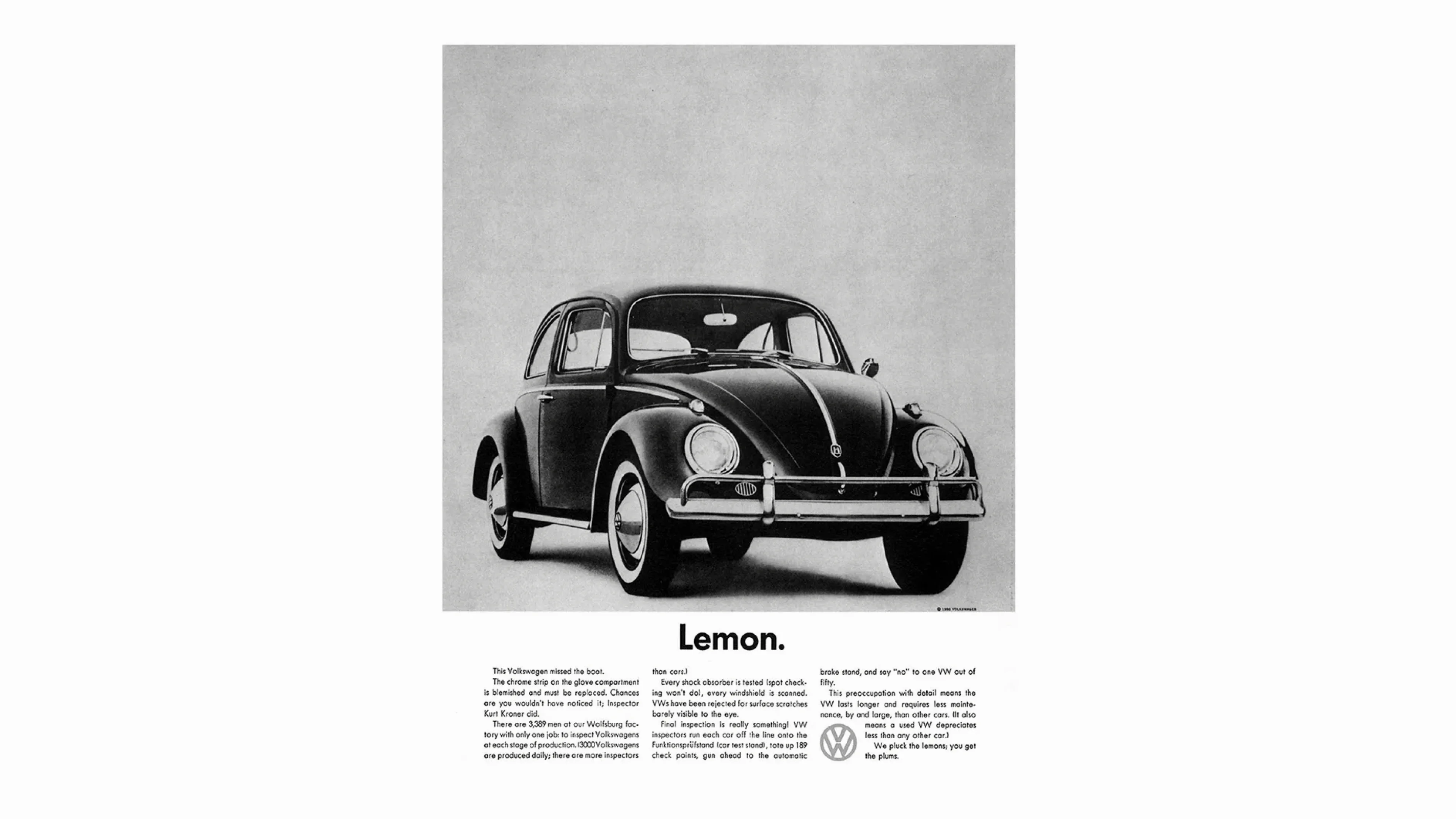
Frank Chimero, quoting George Akerlof, determines that we are in the lemon stage of the internet (and therefore, commercial design at scale). The phrase “Lemon Market” in it’s original context was used to describe an economic phenomenon in which a sharp asymmetry of information available to buyers and sellers undermines the market’s ability to fairly price products. In a market flooded with lemons, and buyers unable to distinguish between high-quality products (Akerlof called these “peaches”.) over sour, undesirable "lemons", consumers would naturally gravitate towards paying a compromised, averaged price that reflects the collective risk of purchasing a “lemon” — a pricing structure which overvalued inferior products, driving high-quality sellers out of said market.
Lemon Ad by Helmut Krone and DDB for Volkswagen (1960)
In this kind of low-trust economy, consuming any kind of content (and therefore producing it) feels like rolling an infinitely-sided die. The chance of being undervalued is high — the risk of you going hungry rises — and so to increase your changes of being seen, you will naturally gravitate towards more universally enjoyed and average tastes. Crittal windows, white subway tiles, Inter tightly kerned, and a Shadcn component library. The same aesthetics which AI models doing “design” work were trained on.
In this context, design is no longer used as a competitive differentiator but as a tool to de-risk businesses. With design as a financial instrument, it becomes liquid — something easily understood by investors, easily scaled across cultural borders, and easily bought and sold at the lemon market. What happens at the end stages of a lemon market? A complete collapse of consumer and buyer trust — a race to the bottom on cost and quality — and what’s left? Lemons, and people who like lemonade.
The Machine in the Garden
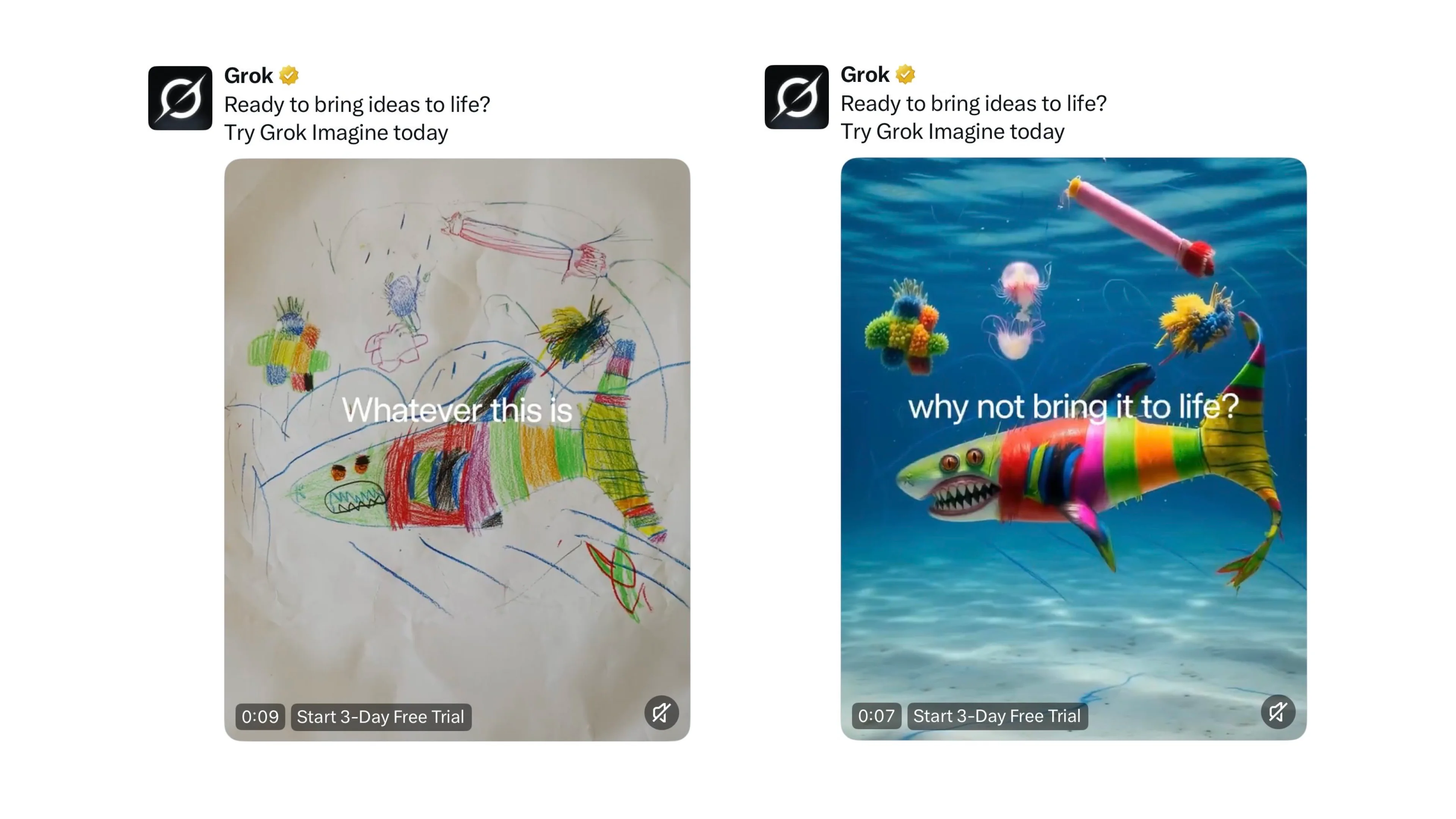
There was a specific campaign of adverts on Twitter recently that caught my eye for Grok Imagine — one showing an illustration of a child’s drawing, the central proposition of it being that Grok AI was a tool to “ready” and perfect an already existent artefact into something better. The copywriting of “Whatever this is” had a particular blood-boiling quality to it.
Timeline Ad for Grok Imagine (2026)
Aside from being a really lame and wasteful use of one of the grandest technical advancements of the last century, the tool actually traps the user into performing a kind of social-design faux pas — to encourage you to see creativity as something that is to be resolved. The ambiguity of the child’s drawing is repositioned as a negative rather than the charm that makes it special: like dirt on a carpet, we are to stamp it out.
Generative tools collapse the strangeness of creative thought into a literal, hyperreal renderings. Because these images are generated from mathematical averages, they have nothing interesting to say. Using AI, really, has become a means to an end — like a synthesiser — the most interesting part of the process being hidden, the excitement that a machine was able to birth this image into the world completely underplayed as a tool to ruin kids’ drawings.
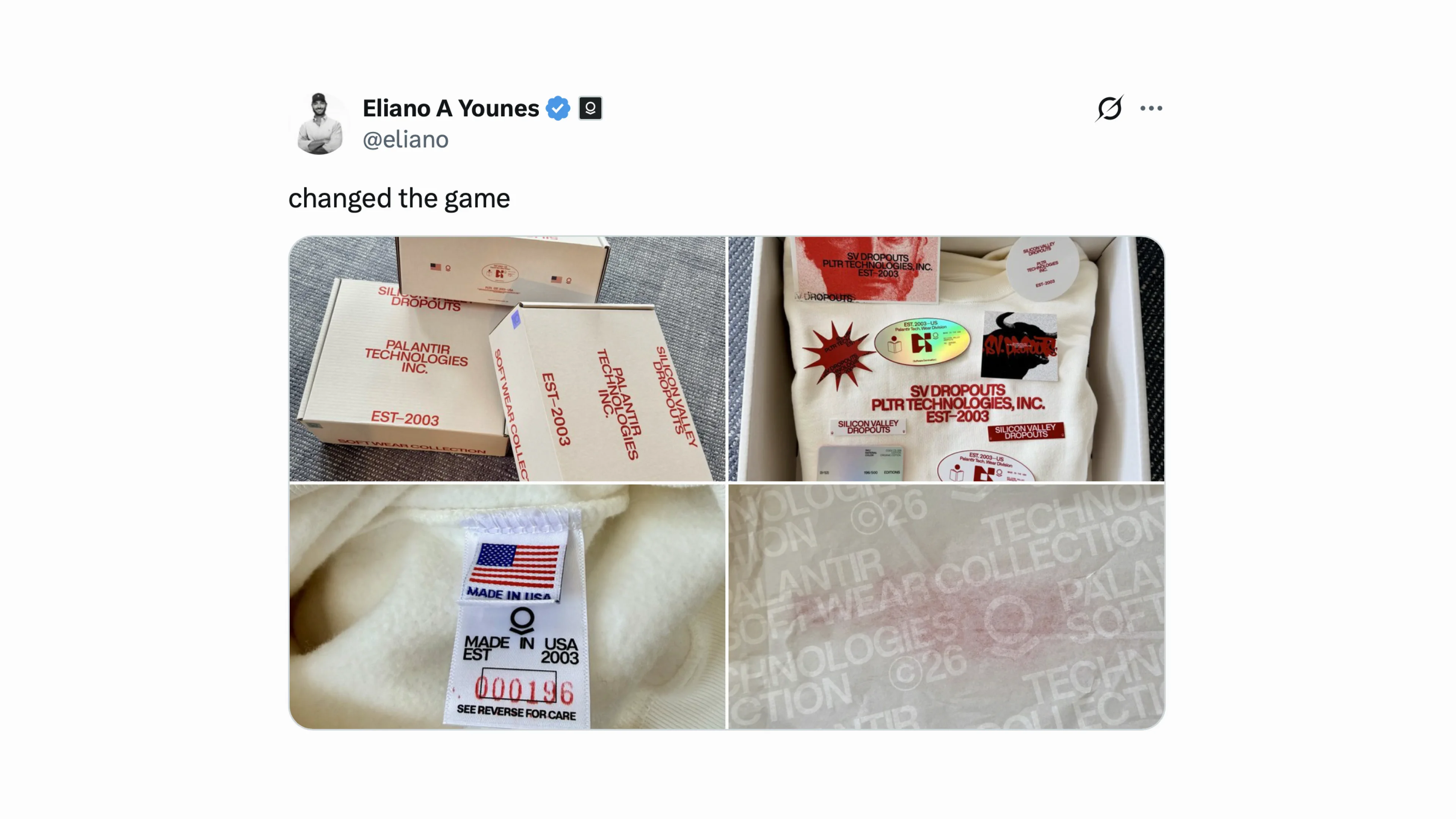
We see a worrying reverence for this mundanity in corporate design culture at the moment. The post-Virgil-Abloh weapons-intelligence company Palantir company merch. Intercom, Cohere, and Cursor, all updating their homepages with AI-generated impressionist textural backgrounds. Companies building their entire identity on stripping creative work from designers, and announcing it with - you guessed it - a designed-up brand reveal.
Eliano Younes, Head of Strategic Engagements at Palantir (2026)
Seeing a trend of things created as if prompted or generated, we teach a generation of makers that the goal is the output, rather than the creative process itself. What remains valuable is taste, intent, and stewardship. When we treat design with the finality of machine thought, we pave over soil to build parking lots. To find the door? Make a mess, don’t chase perfection, use your brain.